Showing posts with label forfeiture actions. Show all posts

New Allegations Raised in Sotheby's Forfeiture Case: Cambodian Statue Stolen in 1972 - Trafficked through Thailand with Head Removed - Scientist Fired [UPDATED]

Federal prosecutors on Friday filed a motion to amend their forfeiture complaint in the case of United States of America v. A 10th Century Cambodian Sandstone Sculpture, Currently Located at Sotheby's in New York, New York.  The U.S. Attorney's Office for the Southern District of New York filed the petition in Manhattan federal district court following a September 27 hearing on the claimants' motion to dismiss.

The government's case is an attempt to seize, forfeit, and repatriate a statue (the so-called Defendant in rem) offered for auction by Sotheby's this past spring. Sotheby's and Decia Ruspoli di Poggio Suasa are the claimants who want the Duryodhana sculpture to remain under their legal control.  Both claimants have vigorously contested the civil forfeiture action.

Federal lawyers, in their memorandum asking the court to accept the amended complaint, write that "[at the September 2012 hearing] the Court repeatedly inquired as to the facts the Government expected to be able to prove at trial with respect to the theft of the Defendant in rem from Prasat Chen, and Sotheby's knowledge that the Defendant in rem was stolen."  The proposed amended complaint and the supporting memorandum filed on November 9 contain the government's response to the court's inquiry, supplementing information provided by prosecutors in their initial April 2012 court complaint.

The  Duryodhana is alleged by prosecutors
to have passed through Bangkok (above).
The government's latest memorandum contends that the Duryodhana statue "was stolen from Prasat Chen in 1972, with the head removed first and the torso afterwards, and acquired by a well­ known collector of Khmer antiquities (the "Collector"), via an organized looting network. (Am. Compl. ¶  17-18). The Amended Complaint further alleges that the 1975 sale of the Defendant in rem was conducted for the Collector by an auction house which had full knowledge of its illicit origin. (Id. 19-20)."  The amended complaint specifically claims that the Duryodhana and a companion piece, termed "the Museum Statue," were transited through Thailand. "The heads of the statues were removed and transported first, followed by the torsos, and ultimately delivered to a Thai dealer based in Bangkok (the 'Thai Dealer'). The Defendant in rem and the Museum Statue were then obtained by a well-known collector of Khmer antiquities ('the Collector'). At the time of this purchase, the Collector knew that the statues had been looted from Koh Ker," write the government's lawyers.

[Author's sidebar: A companion statue to the Duryodhana, a Bhima sculpture, has been identified at the Norton Simon Museum in Pasadena, California.  Meanwhile, two other related statues are reportedly located at the Metropolitan Museum of Art in New York.  See e.g., PRI's The World.]

The government's memorandum further avers that the "Amended Complaint ... alleges additional facts regarding Sotheby's knowledge that the Defendant in rem was stolen. Among other things, the Amended Complaint alleges that (1) Sotheby's and Ruspoli were aware that the Collector had been the seller of the Defendant in rem in 1975; (2) that Sotheby's consulted with the Collector prior to the importation of the Defendant in rem and throughout the 2010-2011 sale process; (3) that Sotheby's never included information about the Collector's pre-1975 acquisition of the Defendant in rem, or his role as the seller in 1975, in the provenance information it disclosed to the public, potential buyers, the Kingdom of Cambodia, or United States law enforcement; and (4) Sotheby's provided inaccurate provenance information to potential buyers, the Kingdom of Cambodia, United States law enforcement, and others, specifically that the Defendant in rem had been seen in the United Kingdom in the late 1960s, at least three years prior to its actual removal from Prasat Chen. (Am. Compl. ¶ ¶ 21, 29-30, 37, 43-44.)"

The proposed amended complaint specifically claims that "in or around 1974, representatives of [a United Kingdom] Auction House conspired with the Collector and the Thai Dealer to fraudulently obtain export licenses for the Defendant in rem and other antiquities to be shipped to the Auction House in the future."  The proposed complaint asserts that "prospective buyers were unwilling to purchase the Defendant in rem due to its lack of legitimate provenance and missing feet. The Auction House, however, ultimately succeeded in selling the Defendant in rem in 1975, with the torso and head now reattached, to a Belgian businessman, on behalf of a Belgian corporation he controlled. After a transfer to a second corporation, and the death of the businessman, the Defendant in rem was ultimately transferred to his widow, Decia Ruspoli di Poggio Suasa (“Ruspoli”), in 2000."

The amended complaint continues with allegations that an officer in Sotheby's Indian and Southeast Asian Art section "retained a[] professional art scientist (the 'Scientist') to prepare a report on the authenticity of the head of the Defendant in rem and the condition of the work done prior to the 1975 sale to rejoin it to the torso. The Officer informed the Scientist that the head had been separated from the torso 'in antiquity,' rather than in 1972."  The proposed complaint cites an internal Sotheby's email that purports to describe the scientist's observation regarding "the perfect condition of the head compared to the distress suffered by the body." The email allegedly offers the scientist's explanation "that the sculpture was either forcibly broken for ease of transport from the find site and then put back together later OR that the head and torso do not belong together." The government writes that Sotheby's later"terminated the Scientist's engagement."

The government also alleges that Sotheby's agreed to contact the Cambodian government about the sale of the sculpture but advised that "this communication should not come from the senior Sotheby's officer" so as not to attract attention.

The claimant's will have an opportunity to respond to the pleadings filed by the U.S. Attorney's Office.

_________________
UPDATE 11/15/2012

The New York Times reports that Sotheby's denies the claims made by federal attorneys.

The news outlet also writes, "Prosecutors say that in 2010, when the statue was being imported into the United States, the owner submitted an inaccurate affidavit to American customs officials, at Sotheby’s request, stating the statue was 'not cultural property' belonging to a religious site."  This statement has prompted some confusion in the blogosphere, which is important to address here.

By way of background, federal prosecutors allege in both their original complaint and their proposed amended complaint the following:

"In or about late April 2010, Sotheby’s imported the Defendant in rem into the United States in order to offer it for sale at auction. In the commercial invoice prepared in connection with the importation, the Defendant in rem is identified as a 10th Century 'Khmer stone guardian' from Cambodia. The Defendant in rem arrived at JFK Airport on or about April 23, 2010.

"On or about April 26, 2010, at the request of Sotheby's, Ruspoli executed an affidavit that was submitted to United States Customs and Border Protection stating, among other things, '[t]o the best of my knowledge, the [Defendant in rem] is not cultural property documented as appertaining to the inventory of a museum or religious or secular monument or similar institution in Cambodia.'"

This information is not new to the proposed amended complaint.  But some readers may have thought otherwise, given that the latest news in the forfeiture case is the government's petition to file a newly amended complaint.  The New York Times story did not report that prosecutors petitioned to file a new complaint.

Meanwhile, The New York Times' description of the Ruspoli affidavit differs from what is reported by federal prosecutors in their proposed complaint quoted above. The newspaper's truncated description may have opened speculation that federal prosecutors might be attempting to build their forfeiture case on the basis of false statements made to U.S. Customs and Border Protection.  But government lawyers thus far have not presented this argument either in their initial complaint nor in the proposed amended complaint.

Of the several legal grounds on which prosecutors seek forfeiture of the Cambodian sculpture, none is based on the contention that anyone entered false information on customs paperwork in violation of 18 U.S.C. § 542.  That federal statute prohibits the import of goods by means of false statements, and that statute can serve as the basis for a forfeiture of illegally imported goods as it did in the famous case of United States v. An Antique Platter of Gold.  While the government intends to support its forfeiture case by referencing the Ruspoli affidavit, it has not argued clearly how the affidavit should be weighed by the court.  Prosecutors have been careful to not explicitly characterize the Ruspoli affidavit as either false or true. The government, nevertheless, strongly implies that the affidavit in some way supports its legal theory of forfeiture of the Duryodhana statue, but not under 18 U.S.C. § 542.

A final observation. Federal prosecutors are likely aware that the language contained in the Ruspoli affidavit parrots the Cultural Property Implementation Act (CPIA) at 19 USC § 2607, which states, "No article of cultural property documented as appertaining to the inventory of a museum or religious or secular public monument or similar institution in any State Party [to the 1970 UNESCO Convention on cultural property] which is stolen from such institution after the effective date of this chapter, or after the date of entry into force of the Convention for the State Party, may be imported into the United States."  It is important to observe that the government does not argue forfeiture of the Cambodian statue based on a CPIA violation.


This post is researched, written, and published on the blog Cultural Heritage Lawyer Rick St. Hilaire at culturalheritagelawyer.blogspot.com. Text copyrighted 2012 by Ricardo A. St. Hilaire, Attorney & Counselor at Law, PLLC. Any unauthorized reproduction or retransmission of this post is prohibited. CONTACT: www.culturalheritagelawyer.com

SLAM Litigants Move Toward Resolving Ka Nefer Nefer Mummy Mask Case

The St. Louis Art Museum (SLAM), the United States government, and the Republic of Egypt appear to be in discussions to settle the contest over title to the mummy mask of Ka Nefer Nefer. Last week the U.S. Attorney's Office for the Eastern District of Missouri filed an unopposed motion with the Eight Circuit Court of Appeals asking for filing deadlines to be held in abeyance in the case. The court granted the motion.

The federal government's October 17 motion tells the court that "the parties believe that continued discussions will be productive and that there is a significant possibility that they will reach a resolution that would obviate the need for the appeal to continue."  The appeals court was notified that "the United States must consult further with the Solicitor General, the Department of State, and the government of the Republic of Egypt before it can propose or agree to any potential settlement terms."

U.S. Attorney Richard Callahan appealed the mummy forfeiture case in June after a federal district court denied the government's efforts to seize and forfeit the Ka Nefer Nefer mask from SLAM.  The federal government alleges that the mask was stolen from Egypt and is in the United States in violation of the law.  SLAM asserts that they are the rightful owners of the artifact.  SLAM filed a declaratory action in February 2011 to gain quiet title to the mask followed by the U.S. Attorney's petition for forfeiture in March 2011.


This post is researched, written, and published on the blog Cultural Heritage Lawyer Rick St. Hilaire at culturalheritagelawyer.blogspot.com. Text copyrighted 2012 by Ricardo A. St. Hilaire, Attorney & Counselor at Law, PLLC. Any unauthorized reproduction or retransmission of this post is prohibited. CONTACT: www.culturalheritagelawyer.com

Arguments Made in Sotheby's Cambodian Statue Case on Motion to Dismiss

The federal district court in Manhattan yesterday heard arguments in the matter of United States Of America v. A 10th Century Cambodian Sandstone Sculpture, Currently Located at Sotheby's In New York, New York.  The United States is seeking the forfeiture of the Duryodhana statue, claimed to have been removed illegally from the Prasat Chen Temple in Koh Ker, Cambodia.

Sotheby's attempted to sell the artifact last spring on behalf of the consignor, Ms. Ruspoli di Poggio Suasa.  But the U.S. government now seeks to repatriate the statue to Cambodia.

Yesterday's argument before Judge George B. Daniels was expected to address the claimants' motion to dismiss and the government's objection.  The court is anticipated to rule on the matter.


This post is researched, written, and published on the blog Cultural Heritage Lawyer Rick St. Hilaire at culturalheritagelawyer.blogspot.com. Text copyrighted 2012 by Ricardo A. St. Hilaire, Attorney & Counselor at Law, PLLC. Any unauthorized reproduction or retransmission of this post is prohibited. CONTACT: www.culturalheritagelawyer.com

Cultural Property Cases Roundup - Khouli et al., Sandstone Cambodian Sculpture, Weiss, and ACCG Appeal [UPDATED]

September is a busy month for cultural property law cases.  More activity is expected in the case of United States v. Mask of Ka Nefer Nefer soon, a case that involves the U.S. government's attempt to forfeit a mummy mask from the St. Louis Art Museum and repatriate it to Egypt.   [UPDATE 9/25/12: The 8th circuit has lately granted an order permitting the government to file its brief in the case on October 26 rather than in September].  Thus far there has been activity in four other important cases.

The case of U.S. v. Khouli et al. saw the submission of legal memoranda by defendants Joseph Lewis, II and Salem Alshdaifat urging the court to dismiss the criminal charges against them.  A grand jury alleges that the pair had roles in trafficking antiquities.  Lewis and Alshdaifait vigorously deny the charges.  A third co-defendant, Mousa Khouli pleaded guilty in April 2012.

On September 18, 2012 the eastern federal district court in New York ruled on Lewis' arguments.  Judge Edward R. Korman denied the Motion to Dismiss but the omnibus motions remain.  The court on September 10, meanwhile, granted Alshdaifat's request to travel to England to meet with overseas business partners and to attend the Coinex London 2012 numismatics show.  The prosecution objected to the request.  According to Alshdaifat's lawyer in a September 5 letter to the court, Alshdaifat "has a joint venture with a business in London, called Roma Numismatics."  It appears, however, that the joint venture is actually Athena Numismatics Ltd., which is listed on VCoins.

In the southern district New York federal court, Sotheby's and Ms. Ruspoli di Poggio Suausa filed a reply memorandum on September 17 to bolster their June 5, 2012 motion arguing that the government cannot forfeit a statute in the case of United States Of America v. A 10th Century Cambodian Sandstone Sculpture, Currently Located at Sotheby's.  The claimants' reply brief was filed in response to the government's pleading submitted last month.

New York state court, meanwhile, scheduled the case against Arnold Peter Weiss for sentencing on September 17.  Weiss pleaded guilty in July to attempted criminal possession of stolen property in the fourth degree.  Terms of his sentence, pursuant to the plea agreement, are outlined here.  As part of the sentence, Weiss published an essay titled "Caveat Emptor: A Guide to Responsible Coin Collecting" in American Numismatic Society Magazine.

In Virginia, oral argument in the fourth circuit court of appeals took place on September 19 before judges J. Harvie Wilkinson, III, Stephanie D. Thacker and Michael F. Urbanski in the case of Ancient Coin Collectors Guild v. U.S. Customs and Border Protection; U.S. Department of State; Assistant Secretary of State, Educational and Cultural Affairs.  The ACCG appealed their August 2011 loss in the lower federal district court in Baltimore.  The organization submitted its written arguments in October 2011, and the federal government replied in January 2012.

The attorneys' oral arguments in the ACCG case can be heard in their entirety here.  In sum, Judge Wilkinson appeared unwilling to involve the judiciary in foreign affairs decisions of the executive branch, which can be overseen by the legislative branch. He had apparent trouble finding that  the U.S. State Department acted arbitrarily or capriciously when implementing import controls over ancient coins under the Cultural Property Implementation Act (CPIA). "Why should we jump into this and make it a tri-cornered mess," asked the court in its apprehension of being drawn into a matter that involves the two other branches of government.

The court appeared to believe that there is a "slight burden" placed on the importer--not on the government--to show where ancient Chinese and Cypriot coins have been in the past few years; the inquiry is not where the coins have traveled in ancient times. And this burden, which is "not a huge hurdle to surmount,"should be placed on importers because importers have the most knowledge.

[Hat tip to Nathan Elkins for highlighting the Weiss article in ANS Magazine].


This post is researched, written, and published on the blog Cultural Heritage Lawyer Rick St. Hilaire at http://culturalheritagelawyer.blogspot.com. Text copyrighted 2012 by Ricardo A. St. Hilaire, Attorney & Counselor at Law, PLLC. CONTACT: www.culturalheritagelawyer.com

Federal Attorneys File Motion in Support of Cambodian Statue's Forfeiture from Sotheby's, Arguing the "Signs of Theft Should Have Been Obvious"

"In this case, the signs of  the Statue's theft should have been obvious to a major international art dealer like Sotheby's."  That is what the United States Attorneys Office, Southern District of New York, contends in its objection filed yesterday in the case of United States Of America v. A 10th Century Cambodian Sandstone Sculpture, Currently Located at Sotheby's In New York, New York.  A June 5 motion submitted by Sotheby's auction house and Ms. Ruspoli di Poggio Suasa--the claimants--urges the federal district court in Manhattan to dismiss the case.  Federal attorneys have now filed their objection.

The United States government is seeking the seizure and forfeiture of the statue claimed to have been removed illegally from the Prasat Chen Temple in Koh Ker, Preah Vihear Province, Cambodia.  Sotheby's attempted to sell the artifact on behalf of the consignor, Ms. Ruspoli di Poggio Suasa, this spring when prosecutors filed their civil lawsuit against the sculpture, known as the Duryodhana.  The government seeks to repatriate the statue, whose carved feet remain in Cambodia.

Calling the claimant's motion to dismiss a "thinly-disguised effort to circumvent discovery ... and argue the ultimate merits before the Government has had an opportunity to obtain further evidence of their wrongdoing," the federal attorneys, led by Sharon Cohen Levin, forcefully explain that the government's complaint is more than sufficient to justify a forfeiture action.  The lawyers argue, in part, that Cambodian law clearly vests title of the statue in the hands of Cambodia, that the statue was taken from Cambodia unlawfully, and that Sotheby's knew that the statue was stolen.

"Cambodian national ownership laws, in fact, are clear and unequivocal," write the prosecutors, and the laws that award title of cultural property to Cambodia have existed since the 1900's.  Counsel for the United States reject the implication that "the archaeological treasures at Koh Ker were abandoned property, free for the taking by anyone willing and able to cut them off their pedestals."

The government also rejects the claimant's argument regarding Cambodia's alleged lack of enforcement of national ownership laws, arguing that there is no requirement to brief such facts at this stage of the litigation.  Nevertheless, the government points out that it "has gathered substantial additional evidence that Cambodia has enforced its laws, which has also revealed that Sotheby's is intimately familiar with Cambodia's enforcement efforts" because there have been "instances where Cambodia has sought to recover its cultural property from Sotheby's, specifically."

Federal prosecutors assert that the Duryodhana was looted without Cambodia's permission, and they distinguish the case from the Ka Nefer Nefer mask case: "In Mask of Ka-Nefer-Nefer, the district court dismissed the Government's civil forfeiture complaint because the complaint, rather than alleging that the mask was stolen, merely stated that the mask was found to be 'missing' from Egypt in 1973." The attorneys reaffirm that the Duryodhan was stolen from Cambodia at a time when Cambodia's patrimony laws were in operation.

The prosecutors contend that "the allegations demonstrate that Sotheby's was well aware that the Statue had been removed from a temple at the Koh Ker archaeological site." As "a sophisticated participant in the Southeast Asian art market" with a Worldwide Compliance Department, prosecutors allege that "Sotheby's either knew that it was stolen from Cambodia, or 'was aware of a high probability that [it] was stolen and deliberately looked the other way,' either of which would meet the Government's burden."  In fact, the attorneys declare that the auction house's actions, which followed a scholar's warning that the statue was stolen, was part of "behavior of a company trying to sell artwork it knows to be stolen if it can figure out how to get away with it."

Sotheby's will have a chance to respond to the government's claims by September.

All quotes are taken from the Memorandum of Law in Support of the Government's Opposition to Claimants' Sotheby's, Inc. Ms. Ruspoli di Poggio Suasaof's Motion to Dismiss.  Citations have been omitted.

This post is researched, written, and published on the blog Cultural Heritage Lawyer Rick St. Hilaire at http://culturalheritagelawyer.blogspot.com. Text copyrighted 2012 by Ricardo A. St. Hilaire, Attorney & Counselor at Law, PLLC. CONTACT: www.culturalheritagelawyer.com

Federal Attorneys and Sotheby's Agree to Keep Designated Information Confidential in U.S. v. A 10th Century Cambodian Sandstone Sculpture

Image courtesy of officeclipart.com
Attorneys for both Sotheby's and the United States have signed a stipulation dated June 29 to keep designated information confidential.  Published on July 2 in the forfeiture case of United States Of America v. A 10th Century Cambodian Sandstone Sculpture, Currently Located at Sotheby's, the stipulation says that relevant documents can be kept secret in pleadings and hearings if the information reveals Sotheby's:
  • potential, current, or past clients,
  • any consignment agreements or sales,
  • proprietary aspects of the auction house's compliance program, and/or
  • its sales strategies.
The stipulation allows Sotheby's to mark such information "CONFIDENTIAL," and the government may challenge the designation.

Specific documents that are to be kept confidential include a "Family Agreement" and a "Sales Agreement for Works of Art" supplied by Decia Ruspoli di Poggio Suasa, the reported consignor of the Cambodian sculpture to Sotheby's.

Meanwhile, lawyers for the United States may request that Sotheby's produce non-confidential documents with confidential information redacted.  At the conclusion of the case, secret information shall be returned or destroyed according to the terms of the stipulation.

The U.S. Attorney for the Southern District of New York petitioned a federal district court in April to seize and forfeit the temple statue, alleging that it was "illicitly removed from the Prasat Chen Temple at the historic and archeological site of Koh Ker, Preah Vihear Province, Cambodia."  Sotheby's filed a motion to dismiss the claim in June.  A hearing on the motion is currently scheduled for September 27.

Given that the forfeiture case is a public matter launched by federal officials and not a lawsuit between private parties; given that the case involves alleged violations of the federal customs law rather than violations of terms of a private contract; and given that compliance methods with respect to public laws on import and/or penal matters are at issue in the case as opposed to trade secrets, the stipulation will perhaps be the subject of debate by observers of the case.

CONTACT: www.culturalheritagelawyer.com
(c) Ricardo A. St. Hilaire, Attorney & Counselor at Law, PLLC

Notice of Appeal Filed by U.S. Attorney in St. Louis Art Museum (SLAM) Ka Nefer Nefer Mummy Mask Case

One day after the U.S. District Court for the Eastern District of Missouri denied the government's latest effort to forfeit the Ka Nefer Nefer mummy mask held at the St. Louis Art Museum (SLAM), U.S. Attorney Richard Callahan filed a notice of appeal.

The notice challenges Judge Henry E. Autrey's denial of the government's motion to strike SLAM's claim, the dismissal of the government's verified complaint to forfeit the mask, the denial of the government's motion for reconsideration to reopen the forfeiture case, and the refusal to allow federal attorneys to amend its complaint.

The case now moves to the Eight Circuit Court of Appeals, which covers Arkansas, Iowa, Minnesota, Missouri, Nebraska, North Dakota, and South Dakota.

CONTACT: www.culturalheritagelawyer.com
(c) Ricardo A. St. Hilaire, Attorney & Counselor at Law, PLLC

Judge Once Again Dismisses Ka Nefer Nefer Forfeiture Case

U.S. District Court Judge Henry Edward Autrey yesterday denied the government's motion to file a new complaint to forfeit the Ka Nefer Nefer mummy mask from the St. Louis Art Museum (SLAM).  In a brief order, the judge described how he had ruled on the case twice before:

"On March 31, 2012 the Court entered an Order dismissing the Verified Complaint in the instant matter. After allowing The Government an extension of time to file its Motion for Reconsideration, on May 7, 2012, The Government filed a Motion to Reconsider Order and Opinion Dismissing Verified Complaint. In the motion, The Government requested, in the alternative, that the Court grant The Government an additional seven (7) days to move for leave to file an amended complaint before entry of judgment. On June 1, 2012, The Court denied the Government’s Motion for Reconsideration in its entirety. For the reasons outlined in The Court’s March 31, 2012 Order of Dismissal, and for the reasons offered in its Order denying reconsideration, The Court denies The Government’s requested leave raised in its motion submitted on June 8, 2012." (Citations omitted).

The U.S. Attorney's Office must now consider whether to appeal the rulings to the Eight Circuit.

UPDATE: The case will be appealed.

CONTACT: http://www.culturalheritagelawyer.com/
(c) Ricardo A. St. Hilaire, Attorney & Counselor at Law, PLLC

Eternal Rest Not Coming Soon for Ka Nefer Nefer Mummy Mask as Motions are Once Again Filed in Missouri Forfeiture Case

"This Court has previously denied the Government’s motion for reconsideration of its Order of Dismissal, and this latest filing by the Government amounts to little more than a second motion to reconsider."  That is what lawyers for the St. Louis Art Museum (SLAM) write in their Motion to Strike the Motion of the United States to File First Amended Verified Complaint.  SLAM's latest motion and memorandum to the Missouri federal court in the forfeiture case of United States v. Mask of Ka Nefer Nefer comes on the heels of the government's filing of a new complaint alleging that the mummy mask should be forfeited.

SLAM's lawyers argue that the parties should not have to keep coming back to court to argue an issue that has already been put to rest:

"The Government’s renewed attempt to re-open this case is unsettling. Not only has this Court dismissed this case, this Court has already once denied the Government’s request to reopen this case on the very same bases now reasserted in the Government’s Motion, and effectively denied the Government’s previous requests for leave to amend post-judgment. The Government now asserts that the Federal Rules of Civil Procedure (“Rules”) grant it limitless attempts to reexamine and to re-open this case until they are successful. The Government’s misinterpretation of these Rules would result in an abuse of procedure, a waste of judicial resources and burden on this Court, and a continued strain on the Claimant Museum’s limited resources."

Attorneys for the government counter in their Memorandum of Opposition that its recent petition asking the court's permission to accept a new forfeiture complaint is timely filed.  They argue:

"The Museum’s Motion to Strike is merely its latest attempt to generate procedural confusion in this case in order to avoid a decision on the merits. In any other setting, one would expect the Museum’s arguments to be presented in the form of a memorandum in opposition to the United States’ Motion for Leave to Amend. Instead, the Museum declined to respond and sought instead to strike the United States’ motion, presumably in the hopes of delaying this Court’s decision on the motion until after July 1, 2012, when the United States’ time to file notice of appeal might arguably run."

The pleadings, published on June 15, are expected to be ruled on by the court.

Hat tip to Gary Nurkin.

CONTACT: http://www.culturalheritagelawyer.com/

Federal Attorneys Test the Waters in Ka Nefer Nefer Case by Submitting New Court Complaint Claiming That Parties "Knew" or Were "Wilfully Blind" to Alleged Fictional Provenance

Following Judge Henry Autrey's order seemingly shutting down the government's renewed effort to forfeit a mummy mask located at the St. Louis Art Museum (SLAM), the eastern district U.S. Attorney's Office has once again filed court papers trying to reopen the case of United States v. Mask of Ka-Nefer-Nefer.  In pleadings dated June 8, federal prosecutors propose both an amended complaint and a request to the court for permission to accept the latest petitions.

The government's motion for permission to accept the new complaint states that "[n]one of the Court’s orders have addressed the United States’s request for time to seek leave to file an amended complaint or indicated that any proposed amendment would be futile. District courts routinely do not terminate a case at the same time that they grant a motion to dismiss; rather, they generally dismiss the plaintiff’s complaint without prejudice and give the plaintiff at least one opportunity to amend his complaint."  The government therefore submitted a new complaint for the court's consideration.

In the new complaint, the government's attorneys repeat their contention that the Ka Nefer Nefer mask was stolen. But they allege more forcefully and more thoroughly claims that the parties involved either "knew" the mummy mask was stolen, unlawfully exported, or illegally imported, or that they were "willfully blind" to the fact that the mask's "purported provenance was fictional."

Details of the government's allegations can be found by reading the The First Amended Verified Complaint.

CONTACT: www.culturalheritagelawyer.com

Sotheby's Asks Federal Court to Dismiss Forfeiture Case Against Cambodian Statue

Sotheby's auction house and Ruspoli di Poggio Suasa yesterday filed a motion to dismiss the forfeiture case against a Khmer statue.  U.S. Attorney Preet Bharara brought the seizure and forfeiture action of United States Of America v. A 10th Century Cambodian Sandstone Sculpture, Currently Located at Sotheby's In New York, New York on April 4. The government's complaint alleges that the statue, which was put up for sale at the auction house this spring, was "illicitly removed from the Prasat Chen Temple at the historic and archeological site of Koh Ker, Preah Vihear Province, Cambodia."  The case is in the federal district court for the southern district of New York.

Prosecutors cite alternative theories to advance their forfeiture claim. They write that "there is probable cause to believe that the [statue] is stolen property introduced into the United States contrary to law" in violation of customs law 19 U.S.C. §1595a(c).  Prosecutors alternatively say that the statue is subject to forfeiture under the criminal anti-smuggling law 18 U.S.C. § 545 because there is probable cause to believe that the statue "has knowingly been brought into the United States contrary to law."  And prosecutors maintain that the statue may be forfeited as proceeds of a theft crime under 18 U.S.C. § 981(a)(1)(C) and the National Stolen Property Act.

Ms. Ruspoli di Poggio Suasa says that her husband bought the Cambodian statue in 1975 in London "in good faith in an arms-length, open market transaction" and that "[t]he couple brought the Statue to their home in Belgium, [where] it remained on display until it was shipped to New York in 2010 to be sold at auction by claimant Sotheby’s, Inc."  Both Sotheby's and Ruspoli di Poggio Suasa are the named claimants in the government's forfeiture action.

The claimants' June 5 motion to dismiss makes the three-pronged argument that "[t]he Government has not alleged sufficient facts to establish a reasonable basis to believe it could meet its burden of proof at trial to show that the Statue was stolen from Cambodia, that it remained stolen at the time of import, and that it was known to be stolen by either Sotheby’s or Ms. Ruspoli."

The claimants challenge the prosecution's assertion that the statue was stolen from Cambodia.  They contend that colonial laws from 1900 and 1925, arguably vesting ownership of the statue in Cambodia, are ambiguous.  "Because the Colonial Decrees do not clearly and unambiguously declare that Cambodia owns the Statue, as a matter of law the removal of the Statue from Cambodia did not render the Statue stolen property," the claimants' attorneys argue.

The decrees were not even enforced, the attorneys suggest: "The [government's] Complaint is silent on whether Cambodia has ever before, in any context, enforced the Colonial Decrees as granting the state ownership of antiquities. Emails incorporated by reference in the Complaint reflect that Cambodia’s Culture Minister did not intend to seek to reclaim objects that left Cambodia 'years ago,' . . . before Cambodia’s 1992 law expressly nationalized antiquities. Another document incorporated by reference in the Complaint shows that Cambodia recognizes that the Companion Statue—which is similarly situated with regard to the Colonial Decrees cited by the Government—'belongs to' a Los Angeles museum [the Pasadena based Norton Simon Museum]." (Citations omitted).

The claimants argue that "[e]ven an apparently clear foreign law does not vest ownership if the foreign state has not actually enforced its own law as granting it title. . . . This rule prevents a country unwilling to take the politically unpopular step of seizing antiquities from its own people from asking this country [the U.S.] to do so on its behalf. It also prevents a country from 'rediscovering' laws that have previously not been enforced, thereby unsettling the reasonable expectations that have developed about the meaning of those laws."

The claimants additionally contend that there is no evidence showing that the statue was taken without Cambodia's permission.  "An essential element in proving that the Statue is stolen is establishing that its removal was without the permission of appropriate government authorities." They compare the case to the government's failed effort in federal district court to forfeit the mummy mask of Ka Nefer Nefer located at the St. Louis Art Museum:  "In Ka-Nefer-Nefer, the Government at least had evidence that the statue was once in the foreign state’s actual possession and that there was no record of a subsequent sale or gift. Here,the Government has not alleged that the Statue was ever in the actual possession of the Cambodian government, and the Government makes no allegation of the absence of gift or sale records. Nor, in any event, would the absence of such records be probative, given the passage of time, the intervening turmoil in Cambodia, and the widespread destruction of property records."

The claimants further declare that the government is unable to show that the statue was in Cambodia at the time the colonial decrees vesting title of the statue in Cambodia were enacted. "The Colonial Decrees on which the Government relies are only relevant if the Statue was still in Cambodia after 1900. . . . The Complaint, however, cites and incorporates powerful evidence that the Statue was not in Cambodia at the relevant time." (Citations omitted).  That evidence is the Parmentier survey.  The claimants' attorneys write that "[t]he Parmentier Survey, published in 1939, devotes five pages to a detailed description of the Prasat Chen temple, including the Western Gopura where the Statue supposedly stood, but contains no reference at all to the large and imposing stone Statue (or its companion). The only reasonable conclusion is that the Statue was not at Koh Ker when the Parmentier Survey was conducted."

The claimants' lawyers argue that "[e]ven if the Government has pleaded sufficient facts to establish that the Statue’s removal from Cambodia constituted theft (which it has not), the Complaint must still be dismissed for the independent reason that the Government has not met its burden of alleging facts showing the Statue remained stolen at the time of import."  The attorneys maintain that Sotheby's imported the statue legally, saying that "the assertion that Sotheby’s imported property it knew was stolen is, on its face, wholly implausible. Sotheby’s, after all, fully and accurately described the Statue to the U.S. Customs Service at the time it was imported, put the Statue on the cover of the auction catalogue it circulated publicly around the world, accurately described the Statue’s provenance in that catalogue, and disclosed its intent to sell the Statue to the Cambodian Minister of Culture months in advance of the planned sale. Those are hardly the acts of a 'fence' knowingly selling stolen loot." (Citations omitted). The attorneys add:

"[Sotheby's] would have to have known at the time of import into the United States that Cambodian law in effect when the Statue was still in Cambodia gave that country title to the Statue. That is, Sotheby’s would have had to anticipate that Cambodia and the U.S. Government would take the position that a tangled, unclear patchwork of French colonial texts—no longer anywhere on the code books of the modern nation of Cambodia—decreed the Statue to be state property within the rules set down by McClain and Schultz. Yet the Colonial Decrees the Government cites are sufficiently obscure that even the Government has been unable to locate a fully legible version of the central decree on which it relies—the 1900 Colonial Decree—which it appears in any event was itself subsequently declared illegal."

[Author's sidebar: the McClain and Schultz cases stand for the proposition that a foreign patrimony law that clearly vests legal title in a cultural object may be used as a basis to trigger prosecution in the United States under the National Stolen Property Act in cases involving those who criminally receive property of another.]

Finally, the claimants object to the assertion that they knew the statue was currently stolen.  The government cited a June 1 email by a scholar who advised Sotheby's that the statue was "definitely stolen."  The attorneys for the claimants express that "the Government bears the burden of proving its case by a preponderance of the evidence. The June 1 email, however, is insufficient to create the required reasonable basis to believe the Government will be able to meet its burden at trial."  The lawyers argue:

"First, the view expressed in the Art Historian’s email—that the Statue is 'definitely stolen' because the feet of the Companion Statue were found at Prasat Chen—is a non sequitor as a legal matter. As the law set forth above makes clear, knowing the place of origin is but one piece of a complex puzzle necessary to assessing whether an antiquity is stolen in the legal sense. It is hardly reasonable to think that Sotheby’s—which the Complaint alleges (at ¶ 18) had both a Worldwide Compliance Department and a Worldwide Legal Department tasked with dealing with such issues—would have formed its belief about whether this Statue was stolen based on the unsolicited opinion of a free-lance Art Historian who offered no view on such critical questions as when the Statue left Cambodia, who owned it under Cambodian law at that time, or what was the significance of the 1975 London sale. And, more importantly, even if the June 1 email had some modest force standing alone, it is completely undercut when one considers the subsequent emails incorporated by reference in the Complaint regarding what the Art Historian said and did shortly thereafter."

Further arguing their point, the claimants' attorneys submit::

"In late June, after traveling to Cambodia and speaking to Cambodia’s Minister of Culture, the Art Historian changed her opinion and retracted her concern that the Statue was stolen. As the Art Historian’s emails to Sotheby’s reflect, the Minister of Culture advised her that his focus was 'to stop anything from being exported from Cambodia now, not to go after pieces that left years ago when there were no restrictions.' He also assured her that Cambodia had no intention of seeking to reclaim the Companion Statue—a telling fact since (a) the Cambodians knew the Companion Statue’s feet had been found at Prasat Chen, and (b) the Companion Statue had a similar known provenance, having been sold by Spink [the London antiquities dealer] several years after the Statue. This new information both revealed that Cambodia was not actively enforcing the Colonial Decrees as vesting title . . . (because they did not plan to attempt to reclaim a work with similar provenance), and undermined any characterization of the Statue as stolen (since it was removed 'years ago when there were no restrictions'). It is hardly surprising that the Art Historian changed her mind, stating that: 'I think that Sotheby [sic] can therefore go ahead and plan to sell' the Statue, and that she 'think[s] that legally and ethically [Sotheby’s] can happily sell the piece.' Repeatedly thereafter, the Art Historian reiterated via email her view that Sotheby’s could lawfully sell the Statue, including: 'It was acquired legally, there should be no problem' and 'The piece was legally obtained, so can be legally sold.'" (Citations omitted).

The claimants conclude by saying that "the Government may not seize property by inventing new interpretations of colonial laws long since consigned to dusty archives, while ignoring the archeological record, settled law, and compelling indicia of good faith."

UPDATE August 2012: See the government's objection to the motion to dismiss.

CONTACT: http://www.culturalheritagelawyer.com/

Motion Denied: Missouri Court Forces Prosecution to Consider Appealing the St. Louis Art Museum Ka Nefer Nefer Mummy Mask Case

The federal court for the eastern district of the United States has denied the prosecution's request to reopen the St. Louis Art Museum Ka Nefer Nefer mummy mask case.  Click here for background.

Judge Henry Autrey's May 30, 2012 order denied the U.S. Attorney's Motion for Reconsideration and extended the time for the government to file an appeal with the Eighth Circuit Court of Appeals.  U.S. Attorney Richard Callahan will now have to decide whether to let the district court dismissal of the forfeiture case stand or whether to appeal to the higher court.

CONTACT: www.culturalheritagelawyer.com

Prosecutors Reveal New Details of Theft Claim in St. Louis Art Museum Ka Nefer Nefer Mask Forfeiture

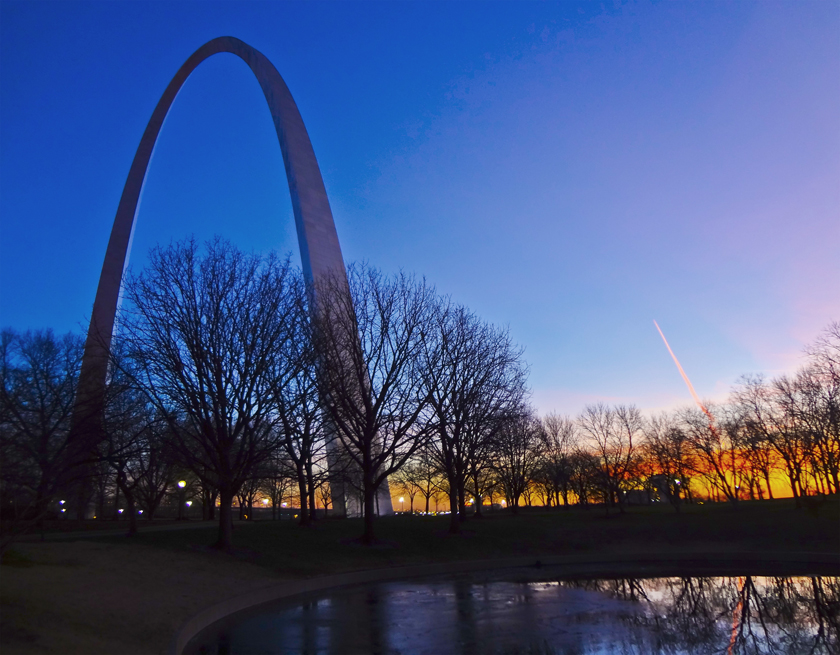
St. Louis Gateway Arch
Source: Sue Ford, National Park Service
Prosecutors in the case of United States v. Mask of Ka-Nefer-Nefer today filed a Reply in Support of Its Motion to Reconsider.  The U.S. Attorney for the Eastern District of Missouri hopes to reverse a judge's April dismissal of the case.  The government ultimately seeks to forfeit the allegedly stolen Ka Nefer Nefer mummy mask located at the St. Louis Art Museum (SLAM) and return it to Egypt.  SLAM denies that the mask is stolen and asserts ownership over the artifact.

The museum filed an objection earlier this week to the government's motion requesting the judge to reconsider the dismissal of the case.  Today's pleading by the government responds to the museum's objection.

The government says that it should be permitted to amend its original complaint if the court continues to uphold its dismissal order.  The prosecution goes on to reveal more specific allegations that it would articulate in a revised complaint:

"To the extent ... that a fuller explanation of the new allegations to be incorporated into an amended complaint would aid the Court in assessing the United States’ request for time to seek leave to amend, the United States is glad to elaborate. If deemed necessary by the Court, the United States' proposed amended complaint would:

• expressly allege that the Mask was stolen from box number fifty-four at Saqqara between 1966 and 1973;

• recite the provisions of the controlling Egyptian cultural patrimony law, Law No. 215, which provides that ancient artifacts excavated after 1951 are the national property of the Republic of Egypt, and establish the absence of any facts that would authorize the Museum’s ownership of the Mask under Egyptian law;

• summarize the relevant Egyptian export laws, which required application to be made to the Egyptian government before the Mask could be exported from Egypt, and allege the absence of any record of lawful exportation;

• detail the sale agreement between the Art Museum and the sellers for the purchase of the Mask, including the obligation of the sellers to provide copies of applicable export and import licenses, and allege the breach of those obligations;

• advance allegations regarding the sellers’ knowledge of the falsity of the Mask’s supposed provenance, as well as information regarding the criminal history of the sellers, to suggest the illicit nature of the sale;

• describe the Museum’s merely pro forma “investigation” into the Mask’s provenance to support the inference that it knew or was willfully blind to the fact that the Mask was stolen property both before and after its importation; and

• offer citations to numerous other provisions of law, including but not limited to Egyptian [patrimony] law No. 215 and 18 U.S.C. §§ 2314 and 2315 [the National Stolen Property Act], to bolster the conclusion that the Mask was imported into the United States 'contrary to law.'"

Federal attorneys further argue that "that the Museum apparently now concedes, for the first time on this Motion, that probable cause, not a preponderance of the evidence, is the ultimate trial burden that the United States will have to bear.  The Museum also appears to agree that the United States should not have to allege 'the date, location, or motive behind the stealing, let alone the identity of the thief' in order to meet that burden, so long as it can establish that the Mask is 'stolen.' The Museum likewise appears to admit that an artifact is considered 'stolen' if its private ownership violates originating country’s patrimony laws."

Prosecutors add that SLAM does not correctly construe the law or the facts of the case.  The U.S. Attorney's Office writes

"The Museum takes a detour, however, when it attempts to distinguish United States v. One Lucite Ball Containing Lunar Material on the ground that 'until 1983, there was no Egyptian law that unequivocally established Egyptian ownership of items like the Mask.'  That claim is not only outside the face of the complaint; it is also incorrect. As the United States set out in its Motion to Strike the Museum’s claim for lack of standing, Egyptian law has provided for national ownership of cultural artifacts like the Mask since at least 1951. While it will ultimately be for the Court to determine whose interpretation of Egyptian law is correct, any such determination is a matter of law that did not need to be pled, and in fact was not pled, on the face of the complaint. Thus, any such contention of the Museum’s is beyond this Court’s consideration on this motion."

[Blogger's sidebar: United States of America v. One Lucite Ball containing Lunar Material (one Moon Rock) and One Ten Inch by Fourteen Inch Wooden Plaque is a federal district court case where authorities successfully seized a moon rock originally given by President Richard Nixon to Honduras.  The rock was bought for $50,000 by claimant Alan Rosen, who purchased the moon rock from a retired Honduran military officer.  The moon rock went missing from the Honduran presidential palace during the 1990's.  The case resulted in the forfeiture of the lunar rock to the federal government in 2003 after government lawyers argued that the rock was stolen from Honduras and smuggled into the United States in violation of 19 U.S.C. 1595a(c)(1)(A), the same statute invoked in the Ka-Nefer-Nefer case.]

CONTACT: www.culturalheritagelawyer.com
Court Denies Sotheby's Request for Discovery Conference in Cambodian Statue Forfeiture Case

A federal judge sitting in the southern district court of New York yesterday denied a request by Sotheby's for a discovery conference.  That decision came in the matter of United States v. A 10th Century Cambodian Sandstone Sculpture Located at Sotheby's in New York, New York.

The case involves an effort by U.S. Attorney Preet Bharara to forfeit a Khmer statue known as the Duryodhana, claiming that the statue was stolen from a temple.  Sotheby's placed the statue up for auction this spring.  Now Sotheby's and Ruspoli di Poggio Suasa, who alleges that her husband purchased the statue in 1975 in the United Kingdom, are claimants in the forfeiture action.

In a case seemingly dominated by letters to the court--which are not easily accessible to the public as compared with the filing of formal motions--Sotheby's Inc. reportedly sent a letter to the court to ask for a discovery conference under Rule 37.  That Federal Rule of Civil Procedure is generally used to compel discovery.  The judge ruled: "Claimant Sotheby's Inc.'s letter request for a Rule 37.2 conference to seek the court's assistance with a discovery dispute regarding the production and translation of foreign law is DENIED."

The motions deadline in the case has been set for June 5, 2012.

CONTACT: www.culturalheritagelawyer.com

SLAM Opposes Government's Motion to Reopen Ka Nefer Nefer Mummy Mask Case

Attorneys for the St. Louis Art Museum (SLAM) oppose reopening the case of United States v. Mask of Ka-Nefer-Nefer.  Last week U.S. Attorney Richard Callahan's office urged the eastern district federal court in Missouri to reconsider its March 31 dismissal of the forfeiture caselaunched to recover the mummy mask. SLAM's lawyers today filed their objection.

Mohammed Zakaria Goneim originally excavated the 19th Dynasty mask at Saqqara, Egypt during the 1950's. The museum bought it on the antiquities market in 1998. Federal authorities say that the mask is illegal contraband, while the museum maintains that it is the owner of legitimate property.

St. Louis Art Museum
 Source: Colin Faulkingham. Public Domain
SLAM's pleading argues that the district court should not reconsider its decision to dismiss the case, and the court should not permit the government to file a newly amended complaint. The museum's attorneys suggest that the government's remedy is to appeal the dismissal of the case to the Eight Circuit Court of Appeals.

The museum's lawyers complain that federal prosecutors
  • did not state any new evidence that should reopen the case,
  • failed to explain any exceptional circumstances that would prompt a reexamination of the dismissal,
  • did not submit an amended complaint when it had the chance, and
  • failed to show that Egyptian law declared ownership over cultural property prior to 1983.
Several passages from SLAM's memorandum of law, quoted below with legal citations omitted, provide both a sketch and the flavor of the museum's arguments.

"In the Eighth Circuit, where an order dismisses a complaint for failure to state a claim but remains silent on whether the order is final, whether it dismisses the entire action, and whether the plaintiff has the right to amend, the entire action is dismissed.... The March 31st Order of this Court is silent ...: it does not state whether it is final, whether it dismisses the entire action, or whether the Government may appeal. As such, the Order was plainly a dismissal of the entire action."

"In its Motion for Reconsideration, the Government does not allege that it has discovered new evidence since the Court’s dismissal of this action that would warrant alteration or amendment of this Court’s Order. Instead, the Government offers evidence it 'could' now present evidence that could have been presented before the dismissal of this case. The Government had ample time between its decision to initiate this lawsuit and the dismissal of this action to provide evidence necessary to bolster its case, but has now missed its opportunity to do so."

"In its Motion for Reconsideration, the Government did not allege any exceptional circumstances that warrant a reexamination of the Court’s final judgment in this case. The Government has had a fair and full opportunity to offer evidence in opposition to Claimant Museum’s Motion to Dismiss, either in the Government’s responsive pleadings or by way of an amended complaint. In fact, the Government now brings to the Court the very same arguments it made in its responsive pleadings to the Claimant Museum’s Motion to Dismiss. Other channels of relief are available to the Government, as it has the option to seek redress from this Court’s Order by appeal to the Eighth Circuit. For all these reasons, this Court should deny the Government’s Motion for Reconsideration."

"The appropriate time for the Government to submit an amended Complaint was at some point during the nearly eleven months between the Claimant Museum’s Motion to Dismiss and the Court’s Order dismissing this action due to those very insufficiencies. Now, more than a year after the Museum first identified the deficiencies of the Verified Complaint, the Government offers only facts it 'could' include in an amended Complaint. But the Government stops there, without submitting a proposed amended Complaint, any documentary evidence of the additional facts the Government 'could' provide, or even a specific description in its Motion of what facts exist to cure the myriad defects identified by the Court."

"[O]ne of the marked deficiencies in this case [is that] until 1983, there was no Egyptian law that unequivocally established Egyptian ownership of items like the Mask.  It is well settled that such a clear declaration of ownership is necessary before exportation of an article constitutes theft. The Government’s objection about being required to 'establish the date, location, or motive behind the stealing, let alone the identity of the thief' overstates what the court expected. In its Order, the Court used the absence of those very basic 'factual and logical steps' to illustrate the utter lack of any facts connecting the Mask’s absence from Egypt with its 'theft.'"

"[T]he Government in this case offered no facts regarding: the date (or even the year) of the theft; the place from which the Mask was stolen; the identity of the thief or thieves (or even so much as speculation as to the identity); the location of the Mask at any time between its suspected location in 1966 and its purchase by the Museum in 1998; the year in which the Mask was exported from Egypt; that there was any law enforcement investigation conducted and, if so, what it revealed; the chain or suspected chain of custody; the identity of any witnesses to either the theft, recording, transport, storage or possession of the Mask in the intervening three decades; or the Egyptian patrimony law that purportedly established Egypt’s ownership of the Mask."

"Nevertheless, the Government requests leave to amend its Verified Complaint. It is interesting that after more than six years during which the Museum has repeatedly sought--first from the Egyptian government, then from the United States government--any evidence suggesting theft or even that the Museum’s possession of the Mask was less than legitimate, the Government now hints at but still does not specify what additional facts may satisfy its burden. The Government has clearly had sufficient time, even within the time frame of this case, to amend its Verified Complaint to cure the deficiencies."

CONTACT: www.culturalheritagelawyer.com

Motion to Reconsider Urges Court to Resurrect St. Louis Art Museum Mummy Mask Case

U.S. Attorney Richard Callahan
Source: USDOJ
Reopen the St. Louis Art Museum (SLAM) mummy mask case. That is what the U.S. Attorney for the Eastern District of Missouri is asking a federal district court judge to do.  In a Motion to Reconsider filed today, U.S. Attorney Richard Callahan's office seeks to resurrect the case of United States v. Mask of Ka-Nefer-Nefer.

A judge dismissed the suit last month, claiming that the government's legal complaint to forfeit a mummy mask from SLAM was insufficient.  The complaint failed to articulate how the mask was stolen and smuggled, or how it was brought into the United States "contrary to law," the court ruled.

But the prosecution says in today's motion that the complaint does not need to be more specific about how the mask was stolen or smuggled. And the government does not need to prove any more than probable cause to believe that the mummy mask was stolen.

Assistant United States Attorney (AUSA) Richard Finneran writes, "While it is true that the Verified Complaint does not disclose the identity of the thief, the exact date of the theft, or 'why' the Mask was stolen, it does allege circumstances that reasonably give rise to the inference that the Mask was unlawfully taken from Egypt’s possession without its permission, and is therefore 'stolen' property  ...."  The AUSA adds that "the United States . . .  must merely establish probable cause to believe that the property is subject to forfeiture" then "the burden then shifts to the Museum to prove the lawful importation of the Mask by a preponderance of the evidence."

The prosecution describes that "one may rightfully infer the stealing of property without direct evidence of all the circumstances underlying the theft."  An analogy is given:  "If a homeowner were to return from a trip abroad to find that all of the electronics in his house were missing, it would certainly be reasonable for him to conclude that they had been stolen, even if he could not identify the thief or the exact time of the theft."

In its motion to reconsider, the prosecution also attempts to correct the court's conclusion that the government "should have alleged the [specific] law under which the Mask should be considered 'stolen.'" AUSA Finneran argues that "Section 1595a itself prohibits the importation of stolen property into the United States, regardless of whether any other law has been violated in the process of importation."  That statute, 19 USC 1595a, states:

Merchandise which is introduced or attempted to be introduced into the United States contrary to law shall
be treated as follows:
(1) The merchandise shall be seized and forfeited
if it—
(A) is stolen, smuggled, or clandestinely imported
or introduced . . . .

The government says that its arguments are sufficient to renew the forfeiture case.  But if not, prosecutors are asking the court to allow the filing of an amended complaint.  AUSA Finneran writes that "the United States believes that an amended complaint could allege numerous alternative bases to believe that the Mask’s importation was 'contrary to law' . . . if such allegations are deemed necessary."

The prosecution says it can offer additional allegations in an amended, verified complaint:  "Among other things, an amended complaint could more explicitly allege the approximate date range and location from which the Mask was stolen. It could also allege additional and alternative bases to believe that the Mask was imported 'contrary to law,' including facts relating to the absence of records and licenses reflecting the lawful import or export of the Mask, the content of the applicable Egyptian cultural property laws, and circumstances relating to the Museum’s purchase of the Mask from its seller. Finally, it could identify particular statutes, regulations, and provisions of foreign and common law which establish that the illegality of the Mask’s importation." 

The prosecution draws the court's attention to the generally accepted principle that "[d]istrict courts routinely do not terminate a case at the same time that they grant a motion to dismiss; rather, they generally dismiss the plaintiff’s complaint without prejudice and give the plaintiff at least one opportunity to amend its complaint."


UPDATE: SLAM's lawyers filed their objection to the government's motion to reconsider on May 14, 2012.

Antiquities "Launderer" Pleads Guilty As Co-Defendants Continue to Litigate Case of US v. Khouli et al.

Egyptian coffin seized in
US v. Khouli et al.
Courtesy ICE.
Mousa "Morris" Khouli pleaded guilty yesterday to smuggling Egyptian cultural property into the United States and making a false statement to law enforcement authorities, according to the United States Attorney for the Eastern District of New York.  Khouli, a New York based antiquities dealer, was indicted by a federal grand jury in 2011 for his role in illegally importing ancient artifacts.  Also indicted were Joseph A. Lewis II, Salem Alshdaifat, and Ayman Ramadan. Ramadan remains at large.  (Those indicted are considered innocent unless proven guilty).

A press release issued by U.S. Attorney Loretta Lynch states the following:
"The defendant [Mousa Khouli] entered his plea before the Honorable Edward R. Korman, United States District Judge, at the U.S. Courthouse in Brooklyn. The defendant faces a maximum sentence of 20 years’ imprisonment. The defendant also entered into a stipulation of settlement resolving a civil complaint seeking forfeiture of the Egyptian antiquities, Iraqi artifacts, cash and other pieces of cultural property seized in connection with the government’s investigation." (See here for background).

This guilty plea follows a motion hearing held on March 23, 2012 where co-defendant Joseph Lewis II's lawyer argued a motion to dismiss the case against Lewis.

Lewis is alleged to have received contraband Egyptian archaeological material from Khouli.  But Lewis' lawyer maintained at the hearing that Lewis was never part of the illegal importation process.  At the March court proceeding, Lewis' attorney argued: "The issue for this case is whether this man participated in or agreed to participate in the process by which these objects were brought in deceitfully through United States Customs.  That's the issue.  There's no evidence of that."

Assistant United States Attorney Karin Orenstein countered that it is inappropriate for the court to dismiss a case based on facts that should be heard and evaluated during a trial.  She also stated that Lewis' involvement in an illegally imported Egyptian coffin found in Miami, Florida in 2008 would be used as evidence to show that Lewis knew about the mechanics of the import process into the U.S. of cultural property.

Attorney Orenstein further described how Khouli acted as "a cultural property launderer."  "He creates good provenance for a piece, so that when it comes through Customs, if it is scrutinized, they will see this is an item that left Egypt at a time when there were no laws protecting it from leaving Egypt."  She added that the Egyptian sarcophagus at issue in this criminal case was described as coming from Khouli's father's collection from Israel in the 1960s. Orenstein alleged that Lewis told Khouli: "Put in the provenance from your late[] father's collection, Israel, 1960s."  Orenstein also alleged that "Mr. Lewis had no reason to believe it came from [Khouli's] father's collection."

Lewis' attorney disagreed with the prosecutor, maintaining that the government lacked trial witnesses to back up its suggested evidence.

The court expressed reluctance to rule on the matter prior to trial when a fact finder would hear and weigh all the evidence.

Meanwhile, on April 11, 2012, co-defendants Lewis and Alshdaifat filed a bill of particulars requesting detailed discovery from the prosecution.  The co-defendants seek information about which ports were used to import the cultural property, what documents were provided to Customs, and which representations on the Customs forms were false.

Khouli is scheduled to be sentenced on September 14, 2012.

Reference: Transcript of March 23, 2012 hearing filed as attachment to Joseph Lewis II Bill of Particulars.

CONTACT: www.culturalheritagelawyer.com

United States Files Motion in SLAM Mummy Mask Case

The U.S. Attorney's Office in St. Louis filed a motion today in response to a federal district court's ruling earlier this week dismissing the government's forfeiture complaint against the Ka Nefer Nefer mummy mask located at the St. Louis Art Museum (SLAM).  The prosecutor asks the court for an extension of time to file a motion for reconsideration of the court's decision or to file an amended complaint.

The federal district court for the eastern district of Missouri on March 31, 2012 dismissed the government's action, saying that the complaint failed to allege specific enough facts to support a claim for forfeiture.  The government's response today sets the stage to either file a revised complaint that meets the court's articulated demands or to appeal the court's dismissal order if a motion to reconsider the decision proves unsuccessful. The prosecutor asks for extended time to pursue these objectives because he states, in part, that he is in a trial expected to last through April 20.

UPDATE 4/11/12: Judge Autrey granted the prosecution's request, writing "PLAINTIFF GRANTED UNTIL 5-7-12 TO FILE WHAT IT SUGGESTS IS A MOTION TO RECONSIDER."

CONTACT: http://www.culturalheritagelawyer.com/

Court Issues Restraining Order in Sotheby's Cambodian Statue Case

U.S. District Court Judge George B. Daniels today issued a restraining order on a statue located at Sotheby's in Manhattan.  He ordered that the ancient Khmer temple statute remain at the auction house, and further ordered that it be made available for inspection by federal authorities pending an April 12 review hearing.

Yesterday federal authorities filed a forfeiture action in the southern district of New York, alleging in in an alternative theory complaint, that the statue is in the United States unlawfully.  Federal prosecutors allege that the ancient Khmer temple statute is stolen property.  Now they are attempting to "arrest" the statue as is common in a forfeiture case.

Chasing Aphrodite has been acquiring legal papers surrounding the case in advance of official publication.  So their blog may be worth a visit to get the latest information.

CONTACT: www.culturalheritagelawyer.com

Manhattan US Attorney Seeks Forfeiture of Cambodian Statue at Sotheby's

The U.S. Attorney for the Southern District of New York today filed a civil complaint to forfeit an ancient Khmer temple statute, known as the Duryodhana, and in the hands of Sotheby's auction house in Manhattan.  A press release issued by U.S. Attorney Preet Bharara stated the following:

"The Duryodhana is believed to have been looted from Prasat Chen during periods of extreme unrest in Cambodia during the 1960s and 1970s. In 1975, a private collector in Belgium purchased the Duryodhana from an auction house in the United Kingdom. Under the laws of French Indochina and Cambodia, the Duryodhana has been the legal property of Cambodia since at least 1900, if not earlier."

Sotheby's in New York
Credit: Jim Henderson
"The statue remained in the possession of the private collector and his/her heirs until March 2010 when Sotheby’s entered into a consignment agreement to sell the statue at auction in the United States. In April 2010, Sotheby’s imported the Duryodhana into the United States and made arrangements to sell the statue, despite knowing that it was stolen from Koh Ker. In March 2011, immediately before the planned auction of the Duryodhana, the Cambodian Government asked Sotheby’s to pull the statue from auction. Sotheby’s withdrew the statue from the auction, but it remains in their possession."

CONTACT: www.culturalheritagelawyer.com

Blogroll

azplanningforwildlife.com m2tvchannel.com bapedaldaprovjambi.com kreis-dl.net news-1212.com landratsamt-doebeln.net landkreis-doebeln.net canadiangoldreserves.net chicagohearse.com tattooremovalessex.com braziltrade-uae.com 333asia.com calliemacdesigns.com gemdoc.net simplefoodjuiceplus.com postabortionstresssyndrome.com descendingpath.com casadopinhole.net myspeechandlanguage.net sezambook.com rerecognition.info bebetsy.info carsoncitybraces.info summitcardiology.info sanfojiangsi.info trailheadgeararchery.info immigrationconnect.info nhhomeless.info tundradialogues.info ibexretail.com kreis-dl.com agiles-eam.com bestbcgolfcourse.com niittyneito.com yenikapimevlevihanesi.com hnr100.com eplogin.com richard-wagner-festival.com landratsamt-doebeln.com lra-doebeln.com terrecatalane.com thesmarterhybrids.com Political Science,Politics And Religion,Lamp For Home,Internet Media Services,Book Holidays Online,Electric Car Engine,House And Garden Magazine,Fashion Art Music,Allobits Business Finance Solutions,Amelia Island Living,Sectb Business management,Biblepl College And University,Synergysigns Home Furniture,Marketing and Promotion,Meristem Nature,Success Business,Food and Nutrition,New Health Foundation,Real Estate Designer,Chase Auto Loans,Economic and Business Review,Business Insurance Quotes,Gambling Commission,Game and Media Technology,TakingBusinessOpportunities,MedicalCenter,FashionModelling,FashionCelebrity,BusinessMarketing,ComputersandTechnology,SubjectAboutTechnology,Children'sEducation,EconomicsBusinessandFinance,Entertainment,BusinessAccounting,HealthTechnology,AirHealth,BodyHealth,HousingDesigners,ArtsandEntertainment,GamingTournament,ForexEducation,HomeDesignIdea,BeautyClinic Professional Translation Streaming Wizard Alcoholism and Drug Medical Laboratory Commerce Business Educational Kids Play Space Education Home Repair Volunteer Fashion Talent Health and Safety Executive Play Web Games Travel and Surfing Property and Estate Agents Technology Group Solutions Student Service Center Construction Industry Media Center Computer Teny Fashion Home Remodeling Services Inspector Network Car Rentals Leader Dogs Rise Health Systems Business Strategy Consultant
Personal Life Coaching
Company Business Coaching
Entertainment News
Physics and Astronomy
Science and Technology
Cheap Vacation Packages
World Business Academy
Planets Project
Travel and Leisure
Prevent Drug Abuse
Education Certified
Play Kids Games
Legal Defense Fund
Real Estate Strategies
Isolation Globale
Insurance Coverage Law
Rock Hotel and Resorts
Medical Insurance
Healthy Mind and Body
Marjahaan Autokatsastus
Free Sports Authority
Auto Insurance Coverage
Global Technics
Advitium Manufacturing
Professional Core Education
Special Finance Services
Bergen County Contractors
Great Children's Art
Health Supply Company
Social Media Power
Texas House Restaurant
Carbon Consultant
Carbon Expert
Low Carbon
Reset Carbon
Healthcare Commissioning
Virtual Job Tryouts
Ethos Academy (Education)
Intrinsic Schools
Attorney General
Technology Software
Business Plans
Digital Media
High School Resources
Adult Resources
Gamblers Anonymous
Ecuador Real Estate
Software Development
Festival Fashion
Drugs And Alcohol
Food Network Recipes
Journal Human Resources
Games and Technology
Technology Development
Web Resources Express
Payday Loans Bad Credit
Art and Craft
Business and Finance News
Ecological Sciences
Education Resources
Web Design
Music Education
World Resources Institute
Business Health Guide