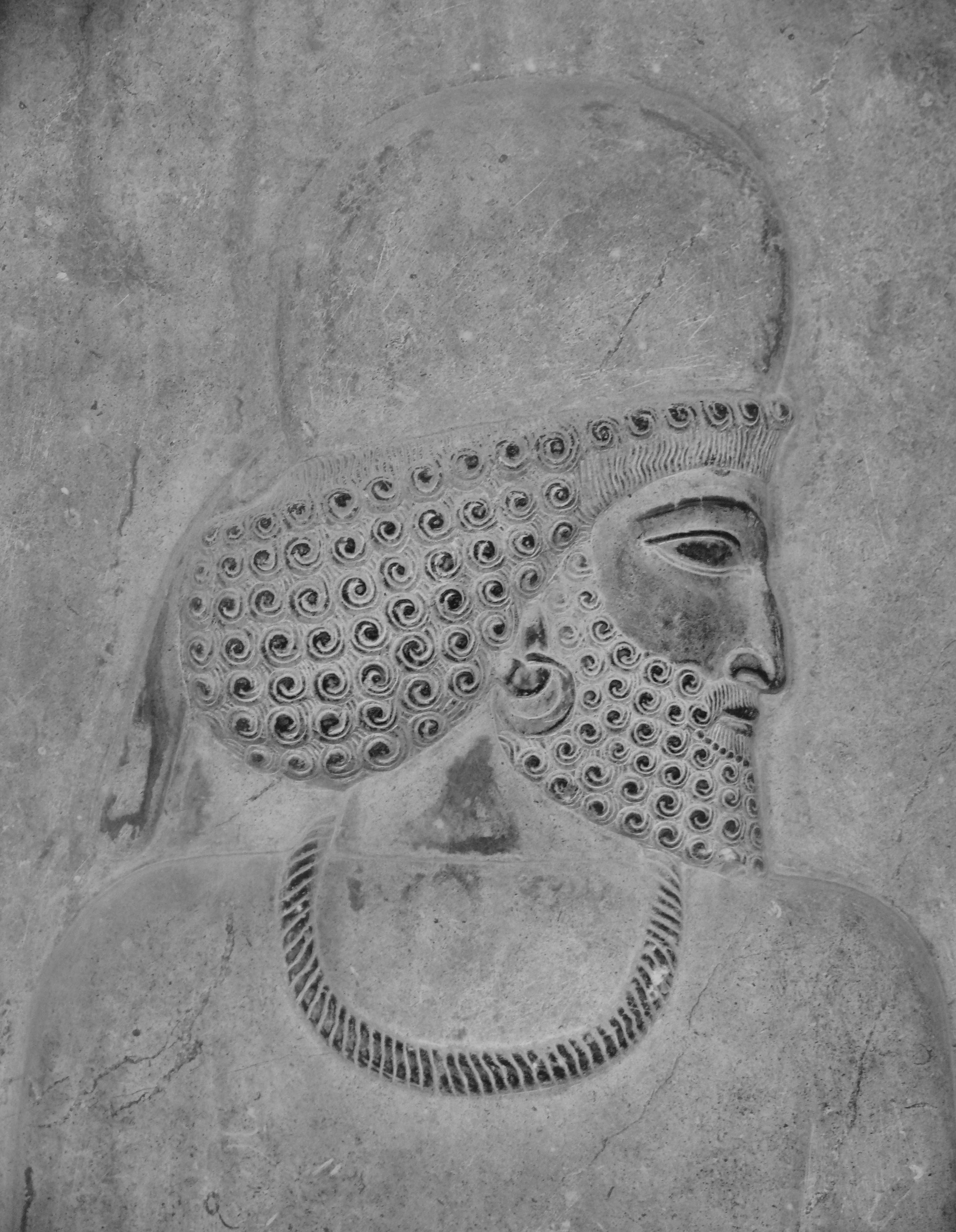
Showing posts with label Iran. Show all posts

Plaintiffs-Appellants in Rubin v. Iran File Reply Brief in First Circuit

"The Plaintiffs successfully obtained judgment against Iran and seek to execute that judgment—pursuant to federal law—against Iranian assets held by the Trustees-Appellees (“Garnishees”). The Garnishees, wealthy museums represented by aristocratic law firms, have sought to stop the Plaintiffs, claiming that the exercise of federal law is somehow unfair to them—that they are above the law." So begins the reply brief filed on behalf of Jenny Rubin and others affected by a 1997 terrorist attack that held Iran liable for damages.  The appellees in the case of Rubin v. Iran are the museums at Harvard and the Boston Museum of Fine Arts (MFA), which house Persian artifacts that are sought after by the plaintiffs-appellants to satisfy a money judgment they were awarded by a federal court against Iran.

The Rubin plaintiffs-appellants appealed to the U.S. First Circuit in March 2012 after losing their case in federal district court.  The museums filed appellate briefs on May 31, 2012, and the United States government submitted a friend of the court brief in June 2012 in support.  Now the Rubin plaintiffs-appellants have entered their response.

The litigation has become complicated, involving technical legal issues and multiple courts.  Highlights of the arguments put forward by the plaintiffs-appellants follow.

First, the plaintiffs-appellants argue that there is a legal basis to award them the artifacts in the collections of the museums under the Foreign Sovereign Immunities Act (FSIA) 28 U.S.C. §1610(g) even if Iran does not own the property.  The museums, they say, have waived their right to challenge the conclusion that plaintiffs-appellants can execute judgment.

Second, the plaintiffs-appellants charge that the museums' "failure to engage in due diligence" cause the institutions to "suffer at their own hands."  That is because, as the plaintiffs-appellants write, the museums "are not 'innocent third parties' (Gov’t 12; Harvard 26, 63; MFA 60) or 'innocent property owners' (Gov’t 17). They are, in some cases, successors in interest to thieves. In other cases, the provenance of their artifacts is simply unknown . . . . Garnishees did no due diligence (or have deliberately hidden the results of their due diligence) in reliance on a three-year statute of limitations and a three-year rule for adverse possession. (Harvard 47, 49-51). Now they have discovered that the state statute of limitations and adverse possession rules are not ironclad and are subject to federal preemption and beg this court for cover."  As a result, the Rubin plaintiffs-appellants say that this "decision not to insist upon documentation—or to ignore and discard the documentation that they received—opens them to recapture by the property’s rightful owner or, as in this case, another party that claims a primary statutory interest." (footnote omitted)

Third, the First Circuit Court should wait to issue a decision until the Second Circuit Court rules on other cases that involve the FSIA and the Terrorism Risk Insurance Act (TRIA), two laws applicable to the Rubin v. Iran case.  The plaintiffs-appellants argue that "[t]he cases squarely present before the Second Circuit the scope of TRIA and FSIA without all of the extraneous complications in [Rubin v. Iran] pertaining to factual questions about the provenance of the Property, the question of whether the Property are rightly considered 'blocked assets' for purposes of TRIA, and the proper interpretation of Iranian domestic law."

Fourth, the Rubin plaintiffs-appellants contend that their case can be resolved in their favor under either FSIA or TRIA: "Plaintiffs request that this Court either resolve this dispute pursuant to [FSIA] §1610(g) or remand for further proceedings under §1610(g). If this Court chooses not to do so, it should grant Plaintiffs the relief requested pursuant to TRIA."

Fifth, the Rubin plaintiffs-appellants say that if the First Circuit decides the case on the basis of TRIA, then the museums hold the burden of proof regarding ownership of the artifacts in their possession, not the plaintiffs-appellants.  They write in their brief that the museums "have argued repeatedly that Plaintiffs have the burden of proving that Iran owns the assets at issue in this litigation and that Plaintiffs have not met that burden. (Harvard 21, 31, 41-46; MFA 12-14, 25-35). They ignore that the reason that conclusive evidence is lacking is because Garnishees cannot document the provenance of their artifacts."  The plaintiffs-appellants submit that they have presented evidence of the artifacts "have presented adequate evidence showing where the Property originated, approximately when it was taken from those locations, and the long history of pillaging that occurred in those locations. Plaintiffs have likewise presented adequate evidence showing—at very least—that the Iranian government retains title or a right to immediate possession of all artifacts that it has not gifted or sold to others."

Finally, the plaintiffs-appellants criticize the museums' argument that TRIA would prompt "an unconstitutional taking of private property."  They write, "Their arguments are frivolous."

The case will continue to move forward in the coming weeks.

This post is researched, written, and published on the blog Cultural Heritage Lawyer Rick St. Hilaire at http://culturalheritagelawyer.blogspot.com. Text copyrighted 2012 by Ricardo A. St. Hilaire, Attorney & Counselor at Law, PLLC. Contact: www.culturalheritagelawyer.com

Rubin v. Iran Update: Illinois District Court Gets Case Back Following Supreme Court's Rejection of Appeal -- U.S. Files Amicus Brief in First Circuit Supporting Museums

The case of Jenny Rubin, et al. v. Islamic Republic of Iran has been restarted in federal district court in Illinois (docket 03-cv-9370).  That is because the United States Supreme Court on June 25 declined to hear the Rubin plaintiffs' request to review the Seventh Circuit decision, which ruled against them. Justices Antonin Scalia and Elena Kagan did not participate in the decision.

Rubin and the other plaintiffs are trying to recover a court-awarded money judgment against Iran for that nation's sponsorship of a deadly terrorist attack that harmed the parties.  They wish to acquire Persian artifacts located at Chicago's Field Museum and the University of Chicago in order execute the judgment. The case moved from the federal district court in northern Illinois to the circuit court of appeals.  The case was to be sent back to the district court by the appeals court, but the Rubin plaintiffs sought review by the U.S. Supreme Court. The high court has now returned the case to the district court, where a status hearing  is scheduled for July 18 at 3:00 p.m.

[UPDATE July 18, 2012:  The Illinois district court held a status hearing and wrote: " The court heard arguments on the competing discovery plans submitted by the parties back on August 5, 2011.  The court will review and consider other orders and documents identified by the parties in open court and issue an order by August 3, 2012, detailing its discovery plan. Parties will then be invited to submit objections to the court's plan, if any, by August 10, 2012.]

In a companion case now in the First Circuit Court of Appeals, the same parties seek to acquire Persian artifacts held at the Museum of Fine Arts (MFA) in Boston and at Harvard.  The United States filed an amicus brief (friend of the court brief) on June 7 in support of the MFA, the Harvard museums, and Iran.

Federal lawyers argue two points in their brief to the First Circuit.  They say that the Terrorism Risk Insurance Act (TRIA) does not authorize the attachment of property not owned by a terrorist state.  Second, the government asserts that Iranian property cannot be “contested” within the meaning of the Iranian Assets Control Regulations because "Iran itself has not articulated any claim to the property in question."

The government writes:
"The United States emphatically condemns the act of terrorism that grievously injured the plaintiffs, and has deep sympathy for their suffering. The United States remains committed to disrupting terrorist financing and to aggressively pursuing those responsible for committing terrorist acts against U.S. nationals. In addition, however, the United States has a strong interest in ensuring that courts properly interpret TRIA’s scope. Normally, unless a person obtains a license from the Treasury Department’s Office of Foreign Assets Control (OFAC), that person is barred from attaching assets that are blocked under various sanctions programs, such as the Iranian Assets Control Regulations."

The lawyers add:
"The district court found that Iran does not, in fact, own the assets in question. The United States takes no position on the question of ownership. If this Court affirms the district court’s holding, however, that ruling will also preclude attachment of the assets under TRIA. TRIA does not, as plaintiffs contend, permit them to attach the artifacts possessed by the Museums if those assets are not owned by Iran."

The government concludes that the court  "should hold that the Museums’ artifacts cannot be attached under TRIA unless the plaintiffs establish that Iran owns the artifacts. Additionally, if the Court reaches the issue, it should hold that an asset is not 'contested' for purposes of [the Iranian Assets Control Regulations] unless Iran itself is claiming an interest in the asset."

Photo by Asana Mashouf.  Creative Commons.

CONTACT: www.culturalheritagelawyer.com

Solicitor General Tells U.S. Supreme Court to Reject Rubin v. Iran Case

Solicitor General Donald B. Verrilli, Jr.
Saying that the Seventh Circuit Court of Appeals got it right, the U.S. Solicitor General told the Supreme Court last week to reject the case of Rubin v. Iran.


Lawyers for Jenny Rubin and other injured litigants who won a judgment against Iran for its sponsorship of a 1997 terrorist attack have been trying to collect a multi-million dollar court award by attempting to seize ancient Persian artifacts located at the Oriental Institute at the University of Chicago and the Chicago Field Museum.  The Seventh Circuit on March 29, 2011 sent the case back to the federal district court in Illinois for review. But the Rubin plaintiffs instead sought review by the nation's highest court.  See here for more background.

The U.S. Supreme Court responded in February 2012 by asking the Solicitor General (the U.S. government's attorney specifically assigned to the Supreme Court) to file an opinion. Solicitor General Donald B. Verrilli, Jr. filed an amicus curiae brief (friend of the court brief) arguing that the Rubin plaintiffs' petition for certiorari (e.g. review by the supreme court) "should be denied" because the appeals court correctly ruled on the matter. The full brief may be found here
.

For more about the parallel case in the First Circuit click here.

CONTACT: www.culturalheritagelawyer.com
(c) Ricardo A. St. Hilaire, Attorney & Counselor at Law, PLLC

Rubin v. Iran: Harvard Art Museums and Boston Museum of Fine Arts File Appellate Briefs in First Circuit

"The order of the district court should be affirmed."  That is the simple conclusion written in the Harvard Art Museums' appellate brief filed yesterday in the case of Rubin et al. v. Islamic Republic of Iran v. Museum of Fine Arts and Harvard University et al.  The appeal is pending in the U.S. Court of Appeals for the First Circuit.

The Boston Museum of Fine Arts
Source: Alex Feldstein.  CC.
The Boston Museum of Fine Arts (MFA) also filed an appellate brief. The museum argues that "[a]llowing Plaintiffs to execute on property long held and owned by an innocent third party, the MFA, does nothing to punish Iran," they write.

Jenny Rubin and other appellants filed an appeal with the First Circuit in March, contending that a federal district court in Massachusetts was wrong when it dismissed their attempt to attach Iranian cultural artifacts located in Boston area museums. The objects include eight stone reliefs from ancient Persepolis and two Luristan bronzes now at Harvard, as well as 977 artifacts acquired by the MFA through scientific expeditions during the 1930s at Rayy and Persepolis. Nearly 2000 artifacts in total are at issue in the First Circuit case.

Rubin and others filed a lawsuit in 2001 in the United States District Court for the District of Columbia and won a court judgment against Iran for its sponsorship of a terrorist attack in Jerusalem in 1997.  In order to collect the money owed to the appellants, the Rubin parties sought to attach Iranian assets in the United States.  They attempted to seize ancient Iranian artifacts housed at Harvard's museums as well as the Museum of Fine Arts (MFA) in Boston, but the effort failed in the district court. That is why the appellants filed an appeal.  Harvard and the MFA object.

Harvard's attorneys say this case "should never have been brought" against the Busch-Reisinger Museum, the Fogg Art Museum, Harvard University, the Harvard University Art Museums, the Peabody Museum of Archaeology and Ethnology, the President and Fellows of Harvard College, the Sackler Museum and the Semitic Museum.  They argue in a lengthy brief that the Rubin appellants "failed to prove that any Harvard artifact belongs to Iran." Harvard asserts that the claim by Rubin and others "fails because it rests on a meritless legal premise—that Iranian law ever gave Iran title to any object."

The MFA, meanwhile, criticizes the Rubin appellants/plaintiffs because they "have conceded that they have no evidence at all that Iran owns a single object at the MFA. Rather, Plaintiffs effectively contend that the possibility that some of the objects may have been illegally removed from Iran decades ago somehow allows Plaintiffs to attach the objects now as if they were property of Iran." "Allowing Plaintiffs to take property from the MFA to which Iran has no valid claim would force the MFA, not Iran, to pay for Iran’s misdeeds," the museum's lawyers complain.

The MFA's legal counsel argues that "the District Court correctly ruled that Iranian Law does not vest Iran with ownership of any of the objects" in its collection. The museum adds that cultural objects specifically not subject to attachment are at least 319 artifacts found outside Iran before November 3, 1930; 107 cultural objects excavated outside Iran's borders; at least nine artifacts made after 1779; scientifically excavated material dug up from Rayy as part of the Joint Expedition to Iran funded by the MFA and the University Museum at the University of Pennsylvania; and items from the Persepolis Expedition sponsored by the Oriental Institute at the University of Chicago, the University of Pennsylvania, and the MFA.

Both Harvard and the MFA take the appellants to task for claiming that Iran maintains a "regulatory" interest in Persian cultural objects.  The lawyers opine that a mere regulatory interest in property is not enforceable in an American court.  To enforce a regulatory interest would amount to "an unconstitutional taking of property," Harvard's counsel writes.

Harvard's attorneys add that the lower district court "correctly ruled that Iranian law does not vest Iran with ownership of the artifacts."  The MFA make a similar argument.  The two institutions maintain that the Rubin appellants cannot bring a legal action to dispute the ownership of ancient Iranian artifacts because such a claim is barred by a three year statute of limitations.

Harvard and the MFA, in any case, claim that they own the artifacts in their collections by adverse possession. "Even if Harvard did not acquire ownership of the objects by gift or purchase—and it did—Harvard acquired title to the objects by adverse possession."  The MFA says as well: "Here, because Iran has never made any claim of ownership to works in the MFA, despite knowledge for many decades that the MFA’s collection included numerous antiquities that originated in Iran, any such claim is time-barred. And because of the MFA’s well-known possession of such antiquities for those decades, the MFA has acquired title to the objects under the doctrine of adverse possession, also barring any claim of ownership by Iran."

Adverse possession is a legal doctrine that awards title of property to a possessor who maintains hostile, open, notorious, exclusive, and continuous possession of the property over a specified period of time. "Harvard’s possession has undisputedly been open and notorious, adverse, and exclusive and continuous for the three-year statutory period," argue its lawyers.

Alternatively, Harvard's attorneys maintain that "if the antiquities belong to Iran, they are immune from execution under" the Foreign Sovereign Immunity Act (FSIA).  The MFA joins Harvard's argument. Harvard's attorneys point out that FSIA's "commercial activity" exception does not apply.   They write that "the objects are not subject to the FSIA’s 'commercial activity' exception, because Iran never used them for a commercial activity in the United States."

The FSIA exception states:
"A foreign state shall not be immune from the jurisdiction of courts of the United States or of the States in any case . . . in which rights in property taken in violation of international law are in issue and that property or any property exchanged for such property is present in the United States in connection with a commercial activity carried on in the United States by the foreign state; or that property or any property exchanged for such property is owned or operated by an agency or instrumentality of the foreign state and that agency or instrumentality is engaged in a commercial activity in the United States."

[Author's sidebar: there has been much discussion recently about legislation to clarify the meaning of FSIA's "commercial activity" provision when applied to foreign art and artifacts in the United States.  See "The Foreign Cultural Exchange Jurisdictional Immunity Clarification Act (S.2212) Should Be Passed" and "U.S. House Passes Foreign Cultural Exchange Jurisdictional Immunity Clarification Act"].

Harvard's lawyers also write that the Terrorism Risk Insurance Act (TRIA) does not put the objects in the hands of the appellants:  "Nor are the [cultural] objects subject to execution under TRIA’s limited authorization of execution against certain 'blocked assets' of terrorist states." "Congress provided that only blocked assets owned by a terrorist party may be used to satisfy judgments against that party," and the cultural artifacts at Harvard are neither owned by Iran nor "blocked assets," the attorneys argue.  The MFA further argues that the appellant's "interpretation of TRIA leads to a constitutional takings problem."

UPDATE August 2012: The plaintiffs-appellants filed their response to the museums' briefs.

For more on the parallel Seventh Circuit / U.S. Supreme Court case, click here.

Rubin v. Iran Cases Move Forward in First Circuit and U.S. Supreme Court

Photo credit: Alborzagros.  CC.
Jenny Rubin and others hurt by a 1997 terrorist attack in Israel filed a 92 page brief yesterday in the First Circuit Court of Appeals.  Rubin et al. v. Islamic Republic of Iran v. Museum of Fine Arts and Harvard University et al. is a case where the appellants seek to enforce a judgment awarded to them under the Terrorism Risk Insurance Act of 2002 (TRIA) by acquiring cultural artifacts claimed to be owned by Iran.  The objects sought are located in Boston and Cambridge, Massachusetts.  Meanwhile, Rubin et al. have also filed an appeal of their Seventh Circuit court case with the U.S. Supreme Court. That case involves an attempt to attach objects located at museums in Chicago.

Hamas carried out multiple suicide bombings on September 4, 1997.  The Rubin plaintiffs sued under the Foreign Sovereign Immunities Act (FSIA) in the United States District Court for the District of Columbia against Iran, and the court found that Iran supported Hamas’ terrorist efforts.  It ruled in the plaintiffs’ favor and awarded money damages.

To collect the judgment against Iran, Rubin et al. sought to attach Iranian assets located in the United States.  They attempted to attach artifacts held at the Boston Museum of Fine Arts (MFA), Harvard’s several museums, the Oriental Institute at the University of Chicago, and the Chicago Field Museum.  The museums in the Boston and Cambridge objected, fighting the case in federal district court in Massachusetts.  The Chicago based institutions battled the case in the federal court in the northern district of Illinois, and later the Seventh Circuit Court of Appeals.

The Seventh Circuit on March 29, 2011 sent the case back to the district court in Illinois for review.  But the Rubin appellants petitioned the U.S. Supreme Court for a writ of certiorari (i.e. a review by the higher court).  Briefs were filed in the Supreme Court (docket 11-431) by both the University of Chicago and Iran on January 6.  Jenny Rubin et al. filed a reply brief on January 18.  There was a waiver of the Field Museum’s response filed on January 4.  The Supreme Court on February 21 invited the Solicitor General to file the U.S. government’s position in the case.  It has not been submitted to the court thus far.

In Massachusetts, meanwhile, the district court ruled on September 25, 2011 to grant the MFA’s and Harvard’s motions to dismiss the case.  Jenny Rubin et al. then brought the matter before the First Circuit Court of Appeals.  They filed an appellate brief on March 28, 2012, arguing three primary issues.

First, the appellants argue that TRIA preempts all other federal and state laws because the case involves the enforcement of judgments by victims of a terrorist attack.  Their brief states:

“Pursuant to TRIA, and Treasury Regulations set forth at 31 CFR §535.201, governing collection actions on behalf of victims of state sponsored terrorism, any interest that Iran retains in the Iranian objects in Harvard and the MFA’s collection is subject to levy by the Appellants. Due to federal preemption by TRIA and 31 CFR §535.201 of any inconsistent state laws, neither Harvard nor the MFA can rely on any conflicting state laws such as those imposing statutes of limitation or governing adverse possession claims to bar or otherwise defeat the Appellants’ right to attach and levy on objects of Iranian origin in each of their possession in which Iran retains any interest.”

Second, the appellants say that Iran maintains an interest in the artifacts at the museums in Massachusetts.  The appellants claim that “[t]he Iranian government has always retained a private ownership interest in artifacts from Persepolis, the former capital of the Persian Empire. For the thousands of years beginning in the reign of Darius, this historic site has never been privately owned and always has been the sole property of the government of Persia and subsequently Iran. In addition, pursuant to the Persian Law Concerning the Preservation of National Antiquities (the “1930 Law”) enacted and in effect since November 3, 1930, all antiquities in Iran, whether movable or immovable, created up through 1794, the end of the Zand Dynasty, fall under the protection, control and ownership of the Iranian government.”

Third, the appellants argue that Iranian law gives Iran an interest in its antiquities unless that country gave a specific license.  They allege that the museums cannot demonstrate that any licenses were given.  The appellants’ brief argues:

“With the exception of objects removed from Persepolis . . .which have always been owned by the Persian government, other antiquities removed from Persia prior to November 3, 1930, were not recognized as owned by Iran. Accordingly, the Appellants always have indicated that the order of garnishment against the MFA and Harvard does not encompass any artifacts of Persian origin, other than those from Persepolis, that provably were exported from Iran prior to November 3, 1930. Nor do the Appellants assert any claim to any artifact from Iran acquired either by Harvard or by the MFA or on loan to either obtained from excavations by scientific expeditions to Iran occurring on or after November 3, 1930, if the holder Museum’s documentation as to the artifact establishes that the Museum acquired each such antiquity as part of the share of a “division” of finds assigned to a scientific archeological expedition as approved by the Persian/Iranian government and as required by the 1930 Law. Similarly, with respect to antiquities exported from Iran as a seller’s purported private property, the 1930 Law vests the government of Iran with an automatic 50 percent interest in all objects found in Iran on or after November 3, 1930. As to antiquities provably in private hands as of the enactment of the 1930 Law, the government is vested with a right of first refusal to acquire the object and a right to seize and confiscate the object if the seller attempts to circumvent his obligation to secure an export permit from the government, which if obtained, requires payment of an export duty equal to five percent of the value of the object as calculated by government appraisers.”

“Without documentary proof that an artifact was assigned to the scientific expedition or that the Iranian government approved the export of purportedly privately held property, Iran retains an interest in all objects under the 1930 Law that is subject to levy by the Appellants pursuant to TRIA.”

The appellees in the case are expected to file their reply shortly.

Briefing Schedule Set in Appeal of Rubin v. Iran v. Boston MFA and Harvard

The case of Rubin et al. v. the Islamic Republic of Iran v. Museum of Fine Arts and Harvard University et al. is in full swing at the U.S. First Circuit Court of Appeals.  The appeals court yesterday set a briefing schedule that calls for the appellant’s brief to be filed on December 27 and the appellee’s brief to be filed 30 days thereafter.  [Update 1/27/12: The court extended these deadlines.]

In September, the United States District Court for the District of Massachusetts denied a request by Jenny Rubin and others to gain title to artifacts held by Harvard, the Museum of Fine Arts, and other Boston area cultural institutions.  The Massachusetts federal district court ruled that it was presented with no proof that Iran owned the antiquities in the museums; therefore the plaintiffs were not entitled to the cultural property.  Rubin and the others soon appealed the decision to the circuit court in October.

The Rubin plaintiffs wish to acquire the artifacts in order to satisfy a multi-million dollar court judgment they won against Iran for that government's role in sponsoring a 1997 terrorist bombing in Jerusalem. The suicide attack inflicted injury on the plaintiffs.

Photo credit: Nightryder84, detail of cup found at Marlik, Iran, Creative Commons.

Massachusetts Court Dismisses Rubin v. Government of Iran v. Boston MFA and Harvard

A Massachusetts federal court has ruled that the Museum of Fine Arts and Harvard University will not lose their collection of ancient Persian objects to eight plaintiffs injured in a 1997 terrorist bombing. The United States District Court, District of Massachusetts, issued a five page opinion on September 15, 2011 denying the plaintiffs’ efforts to gain control over the artifacts to satisfy their multi-million dollar court judgment against the government of Iran.

Jenny Rubin and several other Americans were injured in Jerusalem after Hamas carried out three bombings. Because the terrorist group received backing from Iran, the eight plaintiffs sued the government of Iran in federal district court in Washington, DC, winning a $71.5 million default award after the Iranian government failed to show up to court. Since then, the plaintiffs have sought to recover that judgment.

The government of Iran would not be expected to pay the court award, so the plaintiffs searched for local Iranian assets to seize. One place they looked was Boston/Cambridge, Massachusetts, where museums housed artifacts excavated from ancient Iran. The plaintiffs initiated a court action--known as an attachment--against the Boston Museum of Fine Arts, Harvard, the Harvard University Art Museums, the Busch-Reisinger Museum, the Fogg Art Museum, the Sackler Museum, the Semitic Museums, and the Peabody Museum of Archaeology and Ethnology. But the judge dismissed the plaintiffs’ case in his recent court order.

District Court Judge George O’Toole ruled that the plaintiffs could pursue their attachment action under the federal Terrorism Risk Insurance Act of 2002 so long as they could prove, under Massachusetts state law, that Iran owned the artifacts in the museums. But the plaintiffs could not supply this proof. Judge O’Toole wrote: “In the present case, the plaintiffs have not shown that the ‘goods, effects, or credits’ at issue here are property ‘of the defendant’ Iran." He added that “[d]espite extensive discovery, the plaintiffs are unable to sustain their burden of showing that any particular item held by the Museums is the property of Iran . . . . It is not enough simply to show that antiquities held by the Museums originated from sites within Iran.”

The court highlighted that the plaintiffs failed to prove that an Iranian cultural patrimony law declared ownership of the artifacts. Judge O’Toole wrote: “For example, the so-called ‘1930 Law’ [the plaintiffs’] cite does not automatically vest ownership of excavated antiquities in the government of Iran. In the first place, the 1930 Law does not on its face purport to vest ownership of excavated antiquities in the government. Moreover, the 1930 Law clearly contemplates that antiquities may be owned by private persons. . . . Additionally, other courts have concluded that the 1930 Law permits private ownership and is inconsistent with automatic government ownership of all antiquities originating from Iran.”

The court struck down the plaintiffs’ further argument that an Iranian civil law, Article 26 of its 1928 Civil Code, makes the artifacts government property. The opinion declared that [t]he plaintiffs have not shown that any of the antiquities now held by the Museums were at the time of removal from Iran ‘Government property . . . in use for the service of the public or the profit of the state.’ The necessary conclusion cannot be drawn simply from the fact that the items are the products of archeological explorations that were conducted in Iran . . . .”

The court also rejected the plaintiffs’ claim that antiquities from Persepolis were the property of the Iranian government. The court ruled that “[t]he plaintiffs’ specific argument that items taken from the ruins of the ancient city of Persepolis cannot be privately owned is also not persuasive. The legal argument relies heavily on Article 26 which . . . does not support a generalized conclusion that excavated items necessarily belonged to the government of Iran. The plaintiffs point to texts suggesting that foreign excavators unlawfully took items from Persepolis. Even if that is true as an historical matter, it does not get the plaintiffs where they need to go. As a general matter, establishing that a particular item was unlawfully exported or removed from Iran is not equivalent to showing that it now should be regarded as property of Iran subject to levy and execution. And as a particular matter, the plaintiffs simply are unable to establish that any item in the possession of the Museums, whether from Persepolis or elsewhere, is rightly considered to be the property of Iran.”

The case in the Massachusetts district court is now at an end.  Any appeal would be filed in the First Circuit federal court.

Contact information may be found at http://www.culturalheritagelawyer.com/.

Blogroll

azplanningforwildlife.com m2tvchannel.com bapedaldaprovjambi.com kreis-dl.net news-1212.com landratsamt-doebeln.net landkreis-doebeln.net canadiangoldreserves.net chicagohearse.com tattooremovalessex.com braziltrade-uae.com 333asia.com calliemacdesigns.com gemdoc.net simplefoodjuiceplus.com postabortionstresssyndrome.com descendingpath.com casadopinhole.net myspeechandlanguage.net sezambook.com rerecognition.info bebetsy.info carsoncitybraces.info summitcardiology.info sanfojiangsi.info trailheadgeararchery.info immigrationconnect.info nhhomeless.info tundradialogues.info ibexretail.com kreis-dl.com agiles-eam.com bestbcgolfcourse.com niittyneito.com yenikapimevlevihanesi.com hnr100.com eplogin.com richard-wagner-festival.com landratsamt-doebeln.com lra-doebeln.com terrecatalane.com thesmarterhybrids.com Political Science,Politics And Religion,Lamp For Home,Internet Media Services,Book Holidays Online,Electric Car Engine,House And Garden Magazine,Fashion Art Music,Allobits Business Finance Solutions,Amelia Island Living,Sectb Business management,Biblepl College And University,Synergysigns Home Furniture,Marketing and Promotion,Meristem Nature,Success Business,Food and Nutrition,New Health Foundation,Real Estate Designer,Chase Auto Loans,Economic and Business Review,Business Insurance Quotes,Gambling Commission,Game and Media Technology,TakingBusinessOpportunities,MedicalCenter,FashionModelling,FashionCelebrity,BusinessMarketing,ComputersandTechnology,SubjectAboutTechnology,Children'sEducation,EconomicsBusinessandFinance,Entertainment,BusinessAccounting,HealthTechnology,AirHealth,BodyHealth,HousingDesigners,ArtsandEntertainment,GamingTournament,ForexEducation,HomeDesignIdea,BeautyClinic Professional Translation Streaming Wizard Alcoholism and Drug Medical Laboratory Commerce Business Educational Kids Play Space Education Home Repair Volunteer Fashion Talent Health and Safety Executive Play Web Games Travel and Surfing Property and Estate Agents Technology Group Solutions Student Service Center Construction Industry Media Center Computer Teny Fashion Home Remodeling Services Inspector Network Car Rentals Leader Dogs Rise Health Systems Business Strategy Consultant
Personal Life Coaching
Company Business Coaching
Entertainment News
Physics and Astronomy
Science and Technology
Cheap Vacation Packages
World Business Academy
Planets Project
Travel and Leisure
Prevent Drug Abuse
Education Certified
Play Kids Games
Legal Defense Fund
Real Estate Strategies
Isolation Globale
Insurance Coverage Law
Rock Hotel and Resorts
Medical Insurance
Healthy Mind and Body
Marjahaan Autokatsastus
Free Sports Authority
Auto Insurance Coverage
Global Technics
Advitium Manufacturing
Professional Core Education
Special Finance Services
Bergen County Contractors
Great Children's Art
Health Supply Company
Social Media Power
Texas House Restaurant
Carbon Consultant
Carbon Expert
Low Carbon
Reset Carbon
Healthcare Commissioning
Virtual Job Tryouts
Ethos Academy (Education)
Intrinsic Schools
Attorney General
Technology Software
Business Plans
Digital Media
High School Resources
Adult Resources
Gamblers Anonymous
Ecuador Real Estate
Software Development
Festival Fashion
Drugs And Alcohol
Food Network Recipes
Journal Human Resources
Games and Technology
Technology Development
Web Resources Express
Payday Loans Bad Credit
Art and Craft
Business and Finance News
Ecological Sciences
Education Resources
Web Design
Music Education
World Resources Institute
Business Health Guide